

Pretty much the way you’d look after any other tooth. For a single implant crown, the Scottish Dental Clinical Effectiveness Programme says to treat it like your own teeth, with a toothbrush, interdental brushes and floss. Twice-daily brushing, daily cleaning in between, and check-ups.
If you’ve recently had dental implants in Greater Noida, cleaning around them is mostly an extension of what you already do every morning and night. The difference is where you aim. The spot where the crown meets the gum is where plaque likes to settle, and that’s the area to give a little extra attention.
Why does an implant need cleaning if it can’t decay?
The crown itself can’t get a cavity, but the gum and the bone around the implant can still become inflamed, much as gums around natural teeth do when plaque is left behind. Plaque collects at the gum line just as it does on natural teeth. Left there, it can cause inflammation of the gum around the implant (mucositis) and, in some cases, a deeper infection with bone loss called peri-implantitis.
These aren’t rare. A 2015 systematic review estimated weighted average rates of about 43% for gum inflammation around implants and 22% for peri-implantitis, though the figures varied a lot between studies. Most of the prevention happens at your bathroom sink, with the rest at your check-ups.
A simple daily routine
Morning and night, brush with fluoride toothpaste and a soft or medium brush. Tilt the bristles so they reach the line where crown meets gum. Afterwards, spit the foam out and skip the rinse, as the NHS suggests.
Once a day, get an interdental brush or floss into the gaps on each side of the implant. Now and again, have a look in good light. A little blood or puffiness around the implant is something to keep an eye on.
For one crown, that’s about two extra minutes a day. People usually stop noticing the extra step within a fortnight. If food tends to catch around the implant after rotis or meat, a quick pass with an interdental brush after eating sorts it out. Bridges and implant dentures are more fiddly, and they’re covered further down.
Which cleaning tools help most?
| Tool | What it’s good for | Tips |
|---|---|---|
| Toothbrush (manual or electric) | The outer, inner and biting surfaces, and the gum line | A powered brush may help if you find it hard to clean well by hand |
| Interdental brushes | The gaps either side of the implant | The brush should fit snugly; plastic-coated wire is available |
| Floss or implant floss | Tight contacts, and around the neck of the crown | Wrap it around the crown and slide it gently below the gum line |
| Single-tufted brush | Awkward corners and the back of the last tooth | Useful around bridges and at the gum line |
The Scottish Dental Clinical Effectiveness Programme notes that interdental brushes should fit snugly, without the wire rubbing against the implant crown or the tooth next to it. It also suggests that a rechargeable powered toothbrush may help anyone who can’t clean well with a manual one. Otherwise, either type works. Have your dentist or hygienist size the interdental brushes for you, since guessing tends to go wrong. If the gaps on either side of the implant are different widths, you may end up with two sizes, and plenty of people keep both in the bathroom cupboard.
What about implant bridges and dentures?
They take more work, because there are more surfaces and spaces underneath. People with an implant-supported bridge or denture usually need personalised training in cleaning technique, according to the Scottish Dental Clinical Effectiveness Programme. That typically covers interdental brushes, floss threaders and single-tufted brushes around the supports, practised in the chair until it feels routine. Ask for the exact threaders and brushes to be written down for you, so you can buy the same ones again when they wear out.
If you wear a removable denture that clips onto implants, it has to come out for cleaning, and the attachments in the mouth need cleaning too. Your dental team will show you how for your particular design, and a mirror helps for the first few goes.
Why do check-ups still matter?
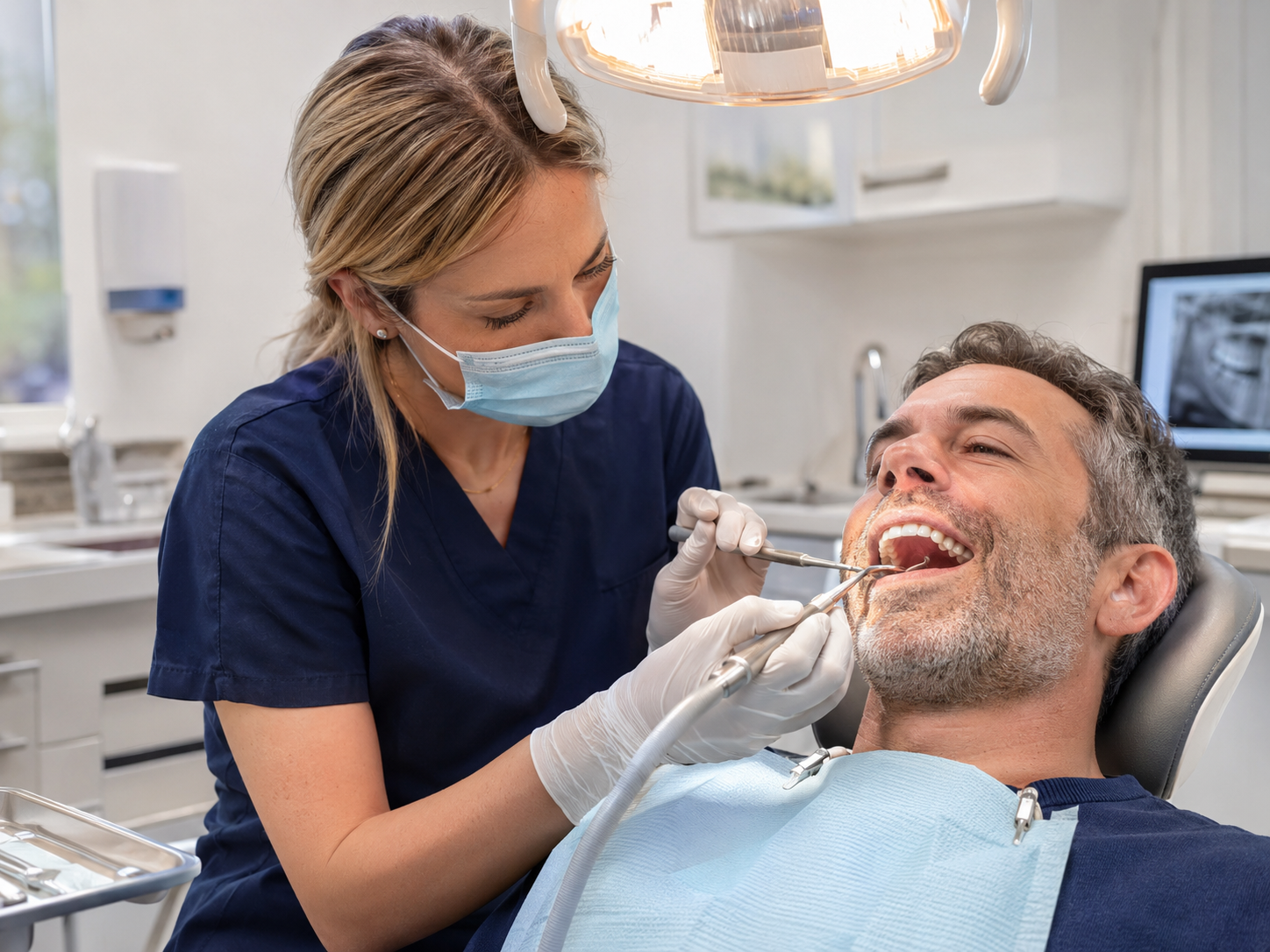
You can’t see the bone, and you can’t easily see under the gum either. Guy’s and St Thomas’ NHS Foundation Trust makes the point that implants need ongoing care with your dentist involved. So at a review, the gum gets checked, an X-ray may be taken for the bone, and any hardened deposits get scraped off. Bring your interdental brushes along, so the hygienist can check the size still fits and watch how you use them.
How often you’re seen depends on your gums, your general health and how many implants you have, so ask what interval suits you. Pop the next date in your phone before you leave. And go even when nothing hurts, since gum trouble around implants often doesn’t hurt early on.
What should prompt an earlier visit?
Ring the clinic if the gum bleeds every single time you clean, or it’s gone red and puffy. Pus or a nasty taste counts too. So does a crown that wobbles, or a bite that suddenly feels off. Often it’s nothing much, but small problems are far easier to sort out.
At Executive Implant Dental Clinic, implant treatment is led by Dr. K.D. Chaudhary, a prosthodontist with more than 21 years in restorative and implant dentistry. Do ask for the cleaning routine to be shown to you again at a review. If you’re earlier in the process, our guide to the parts of a dental implant shows what you’ll be cleaning around. And if your implant is still new, how an implant bonds with bone explains why gentle care matters during healing. Or you can schedule a review at a time that works for you.

Frequently asked questions
Can I use a water flosser around my implant?
Yes, many people like one, particularly around bridges. Use it as well as interdental brushes or floss, though, and check with your hygienist that it suits your set-up.
Does it matter which toothpaste I use?
Ordinary fluoride toothpaste is usually fine, and it protects your natural teeth too. You’d only need something special if your dentist recommends it.
Do bleeding gums around an implant mean it’s failing?
No, not on its own. More often the gum is inflamed, and better cleaning at home plus a professional clean usually calms it down. Still, get it looked at soon rather than at your next routine visit.