
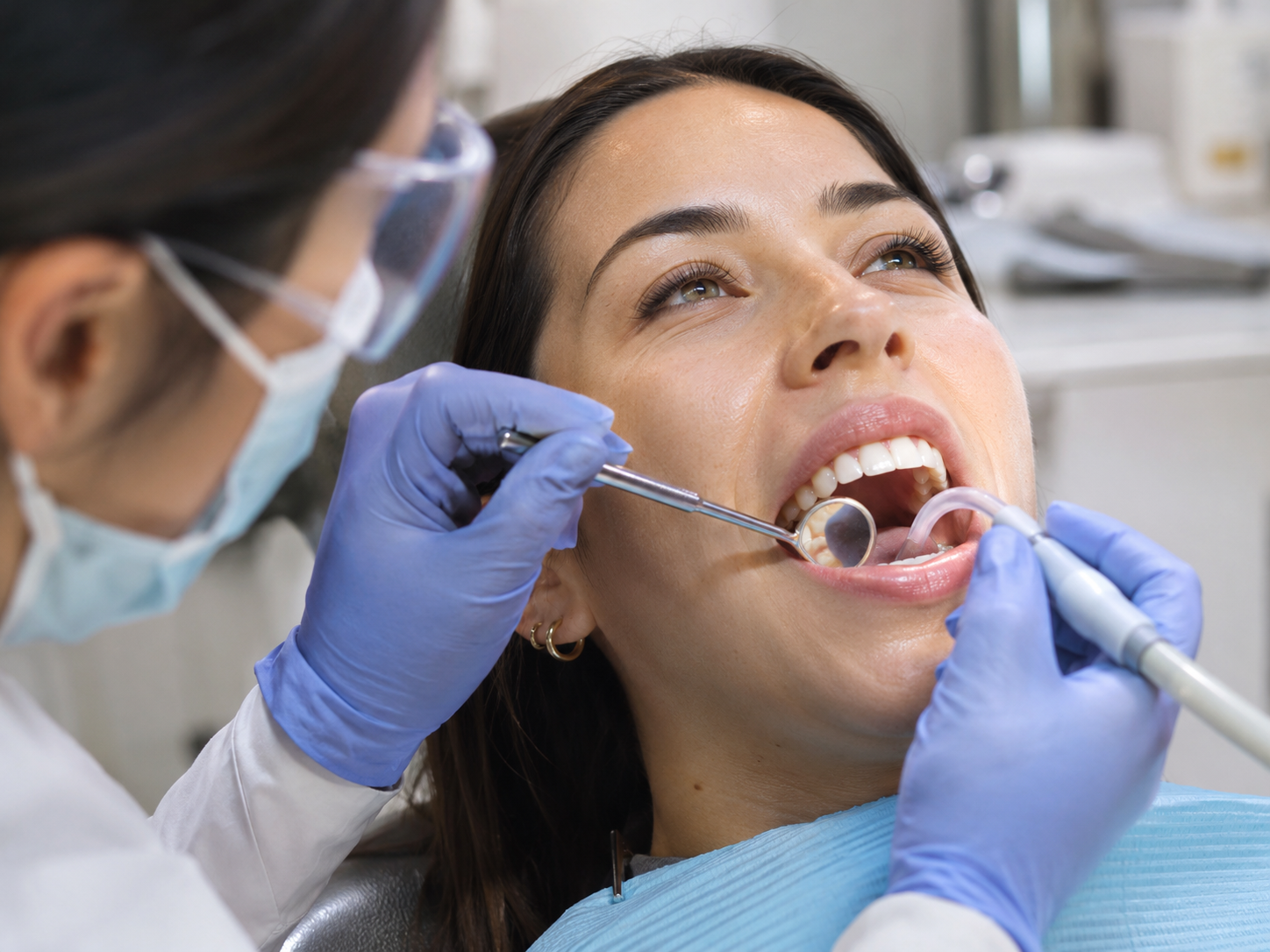
A routine dental check-up is mostly about looking and asking questions. Your dentist examines your teeth, gums and the rest of your mouth, asks about your general health, and discusses anything they notice. Sometimes, an X-ray may be recommended. Most routine check-ups are painless and don’t take very long.
People often book a check-up with a dentist in Greater Noida only when something starts to hurt. That’s understandable, but a dental visit is far more useful before a problem develops. Here’s what happens during a dental check-up, what your dentist looks for, and when additional tests may be needed.
What Does the Dentist Check During a Dental Check-Up?
The NHS outlines the key parts of a routine dental check-up. Your dentist examines your teeth, gums and mouth, asks about your health and any problems since your last visit, and may offer advice on diet, smoking and oral hygiene. In practice, the examination usually covers the following areas:
- Your teeth, one by one: Your dentist uses a small mirror and light to examine each tooth, looking for early signs of decay, chips, worn edges and cracks. Soft spots or dark lines between teeth may need a closer look.
- Existing fillings and crowns: Fillings and crowns can wear down, develop damaged edges or chip over time. Your dentist checks them for signs of damage, leakage or decay underneath.
- Your gums: Healthy gums are generally firm and pink. Your dentist may use a thin probe to measure the spaces between your teeth and gums, known as periodontal pockets. These measurements help identify signs of gum disease. Bleeding when brushing is another early warning sign, according to the NHS, so mention it if you’ve noticed any.
- Your bite: Your dentist checks how your upper and lower teeth meet. Flattened or shiny patches on your teeth may indicate grinding or clenching, particularly during sleep.
- The soft tissues in your mouth: Your tongue, cheeks, lips, the roof and floor of your mouth are examined for ulcers, unusual patches or lumps that may need further attention.
- Your jaw and neck: Your dentist may examine your jaw joint and feel around your jaw and neck. They may also ask whether you experience clicking, stiffness or frequent headaches.
Each of these checks helps your dentist identify potential problems early. Even small changes can be easier to manage when detected before they become more serious.
Why Does the Dentist Ask About Your Health?
Your oral health is closely connected to your general health. Certain medicines can cause dry mouth, increasing the risk of tooth decay. Diabetes can make gum problems harder to manage, while hormonal changes during pregnancy may make gums more sensitive and prone to bleeding. Smoking can also affect gum health and slow down healing.
Your dentist needs to know about these factors to assess your oral health accurately and recommend appropriate care.
Bring a list of any medicines you take and mention new diagnoses, even if they don’t seem related to your teeth. Also, tell your dentist about any changes since your last visit, such as tooth sensitivity, discomfort when biting or bleeding gums.

When Are Dental X-Rays or Other Tests Needed?
Dental X-rays aren’t necessary at every check-up. However, some problems cannot be identified through a visual examination alone. Decay between back teeth, infections around tooth roots and bone loss caused by gum disease may only become visible through dental imaging.
Your dentist will decide whether you need X-rays based on your dental history, current symptoms and risk of developing oral health problems.
Other tests may be recommended when there is a specific concern. For example, a toothache may require a gentle tapping test or a cold test to check how the tooth’s nerve responds. An unusual patch in your mouth may be photographed and monitored, or you may be referred for further assessment. If you’re unsure why a test is recommended, don’t hesitate to ask your dentist.
Is a Dental Cleaning Part of the Check-Up?
Sometimes. Many patients have a scale and polish during the same appointment, while others may be scheduled for a separate visit with a dental hygienist.
During scaling, your dentist or hygienist removes hardened plaque, known as tartar, which cannot be removed through regular brushing. Special dental instruments are used to clean around the teeth and along the gum line. Your gums may feel slightly tender afterwards, particularly if there is existing inflammation.
Your dentist or hygienist may also show you areas you tend to miss while brushing. Paying attention to this advice can help you improve your daily oral hygiene and maintain healthier gums between appointments.
How Often Should You Have a Dental Check-Up?
There is no single schedule that works for everyone. According to the NHS, the recommended interval between dental check-ups can range from 3 months to 2 years, depending on your oral health and risk of developing dental problems.
For example, someone with healthy gums and no recent history of tooth decay may need fewer visits than someone who has experienced gum disease or recurring cavities.
Your dentist should recommend a suitable interval at the end of each appointment and explain why it is appropriate for your needs. Changes in your general health or medication may also mean that your check-up schedule needs adjusting.
What Happens After a Dental Check-Up?
Once the examination is complete, your dentist will explain what they found. Usually, one of three things happens:
- Everything looks healthy: No immediate treatment is needed, and you can schedule your next check-up at the recommended interval.
- Something needs monitoring: Your dentist may notice an early sign of decay or another minor concern that needs to be checked at your next visit.
- Treatment is recommended: If a problem needs attention, your dentist will explain the available treatment options, how urgent the issue is and what each procedure involves before you make a decision.
At Executive Implant Dental Clinic, care is led by Dr. K.D. Chaudhary, a prosthodontist with more than 21 years of experience in restorative and implant dentistry.
If you’ve noticed bleeding gums, read our guide on bleeding gums when brushing before your visit. If you have tooth pain but cannot see an obvious cavity, our guide on toothache without a visible cavity may also help.
When you’re ready, you can book a dental check-up at Executive Implant Dental Clinic.

Frequently Asked Questions About Dental Check-Ups
Does a Dental Check-Up Hurt?
A routine dental check-up should not be painful. Most of the examination involves looking at your teeth and gums, with occasional gentle probing to check gum health. If your gums are inflamed, the probe may cause slight discomfort or bleeding. Let your dentist know if you’re nervous so they can explain each step and help you feel comfortable.
How Long Does a Dental Check-Up Take?
A routine dental check-up usually takes a relatively short time. However, your appointment may take longer if X-rays are needed, a scale and polish is included, or you’re visiting the clinic for the first time and need a full dental history assessment.
What If I Haven’t Been to a Dentist in Years?
You’re not alone, and there’s no need to feel embarrassed. Your first appointment may take a little longer because your dentist will need to assess your teeth, gums and overall oral health. If treatment is needed, they can create a plan based on your priorities, starting with the most urgent concerns.