
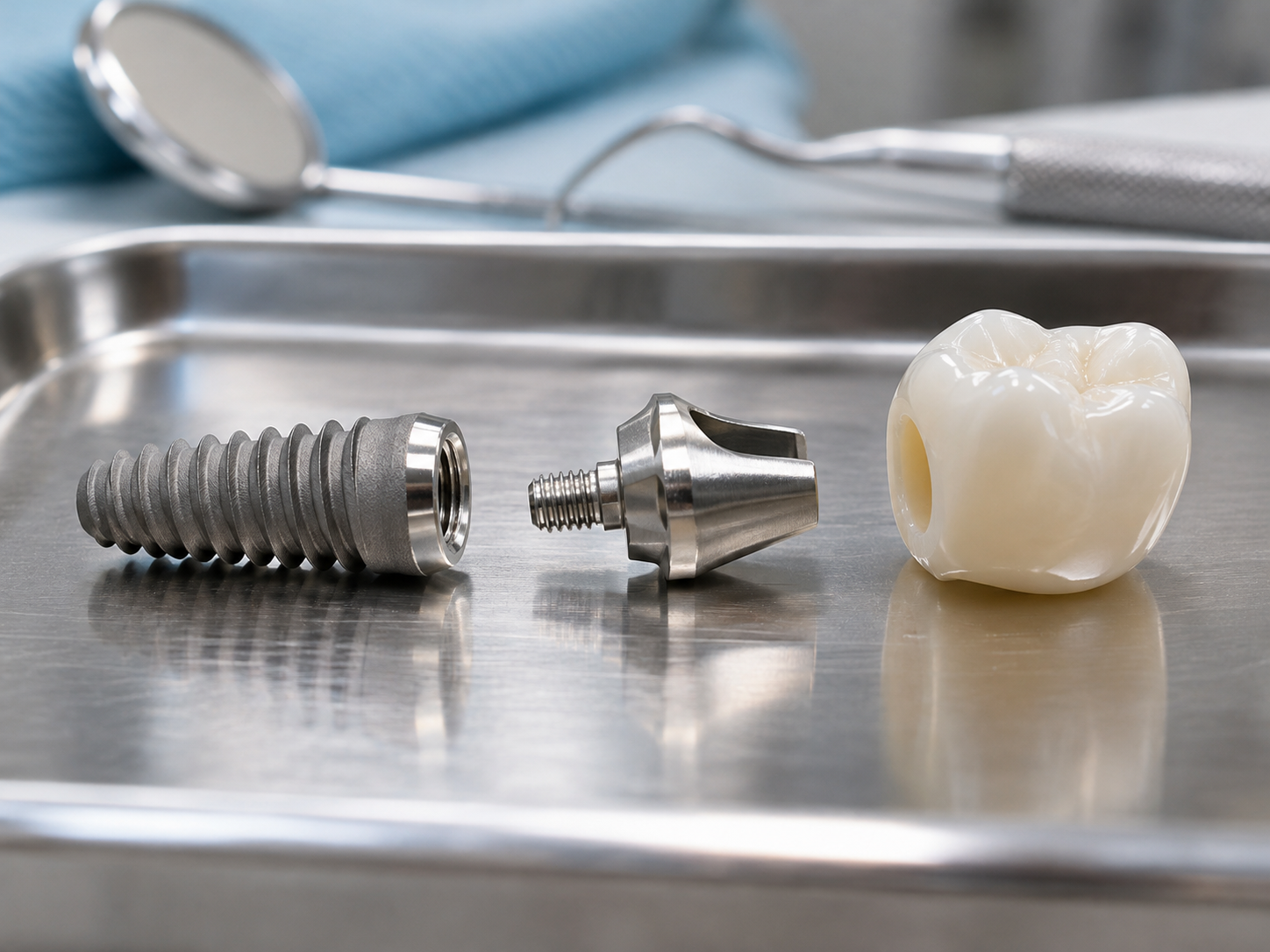
A dental implant tooth has three main parts. There’s the implant itself, a small post placed in the jawbone; the abutment, which acts as a connector; and the crown, the replacement tooth you actually see. The American Academy of Implant Dentistry (AAID) describes these components in that order, from the bone up, with each one serving a different purpose.
If you’re looking into dental implants in Greater Noida, understanding these parts makes your treatment plan easier to follow because each component is usually fitted at a different stage. It also helps when your dentist discusses materials or explains whether your crown will be screw-retained or cement-retained, so the conversation feels less like technical jargon.
The Three Parts at a Glance
| Part | Where It Sits | What It Does | Common Materials |
|---|---|---|---|
| Implant (Post or Fixture) | Inside the jawbone | Replaces the natural tooth root | Usually titanium |
| Abutment | Connects the implant to the crown, extending through or above the gum | Supports and connects the crown to the implant | Titanium or zirconia |
| Crown | Above the gum | Acts as the visible replacement tooth and biting surface | Ceramic, often on a metal or zirconia base |
Most people focus on the crown, and that’s understandable since it’s the part you see when you look in the mirror. However, the implant post and abutment underneath also play important roles in supporting the replacement tooth and handling the forces generated when you chew.
The Implant: The Part in the Bone
The implant is the root replacement. It’s a small, screw-shaped post placed into the jawbone where the natural tooth root used to be. Once it’s in position, the surrounding bone gradually bonds with its surface and holds it in place. The American Dental Association notes that this process can take several months.
This bonding process explains why the implant is usually left undisturbed for a period before the final replacement tooth is attached and used for normal chewing. The bone needs enough time to establish a stable connection with the implant.
It’s also the stage patients tend to ask about most, so we’ve covered how a dental implant bonds with the jawbone in a separate guide. Implant placement is generally performed under local anaesthesia, as Guy’s and St Thomas’ NHS Foundation Trust explains. This means the treatment area is numbed while the implant is placed.

The Abutment: The Connector You Rarely See
The abutment sits between the implant post and the crown. It connects the two components and provides support for the replacement tooth. Depending on the implant system, it may be a separate piece screwed onto the implant or incorporated into another component of the restoration.
Patients rarely ask about the abutment material, yet it can influence the appearance of the final restoration, particularly towards the front of the mouth. The Foundation for Oral Rehabilitation lists titanium and zirconia among the commonly used options.
Titanium is strong, durable, and widely used in implant dentistry. Zirconia is tooth-coloured, which can offer an aesthetic advantage in certain situations, especially when the gum tissue is thin and a greyish appearance from underlying metal could otherwise become visible.
You may never see your abutment. Your dentist selects the appropriate type and material after considering the implant’s position, gum thickness, and the appearance you want to achieve.
The Crown: The Tooth You See
The crown is the visible part of the dental implant. It’s custom-made to match the shape, size, and shade of your neighbouring teeth, according to the American Academy of Implant Dentistry (AAID). It’s also the part that comes into contact with food when you bite and chew.
The crown can be attached to the abutment in two main ways. Your dentist will consider the implant’s position, the available space, and your functional and aesthetic requirements when choosing the attachment method.
- Screw-Retained Crown:The crown, sometimes joined to its abutment, is secured using a small screw. The screw access hole is sealed with a suitable restorative material after placement.
- Cement-Retained Crown:The crown is attached to the abutment using dental cement, similar to how a conventional crown is secured over a prepared natural tooth.
Why does the difference matter? A screw-retained crown can generally be removed by the dentist for repairs, maintenance, or professional cleaning. This can be particularly useful if the crown chips or the screw needs attention years later.
A cement-retained crown does not have a screw access hole on its visible or biting surface, which can offer certain aesthetic advantages. When the implant’s angle or position makes screw access difficult, the Foundation for Oral Rehabilitation explains that cement retention may be considered as an alternative.
What Else Is Used Along the Way?
A few temporary components may be used during different stages of implant treatment. These help protect the implant site, support healing, and prepare the surrounding gum tissue for the final restoration.
- Cover screw: Protects the implant’s upper opening while it heals beneath the gum tissue.
- Healing abutment or healing cap: Helps shape the gum tissue around the implant in preparation for the final crown.
- Temporary tooth: In some cases, a temporary replacement tooth may be provided so you don’t have to remain without a tooth while the implant heals.
These components are generally used during specific stages of treatment rather than remaining as permanent parts of the final restoration. They help protect the surgical site and prepare the gum tissue for the replacement tooth.
How Do the Parts Work Together Over Time?
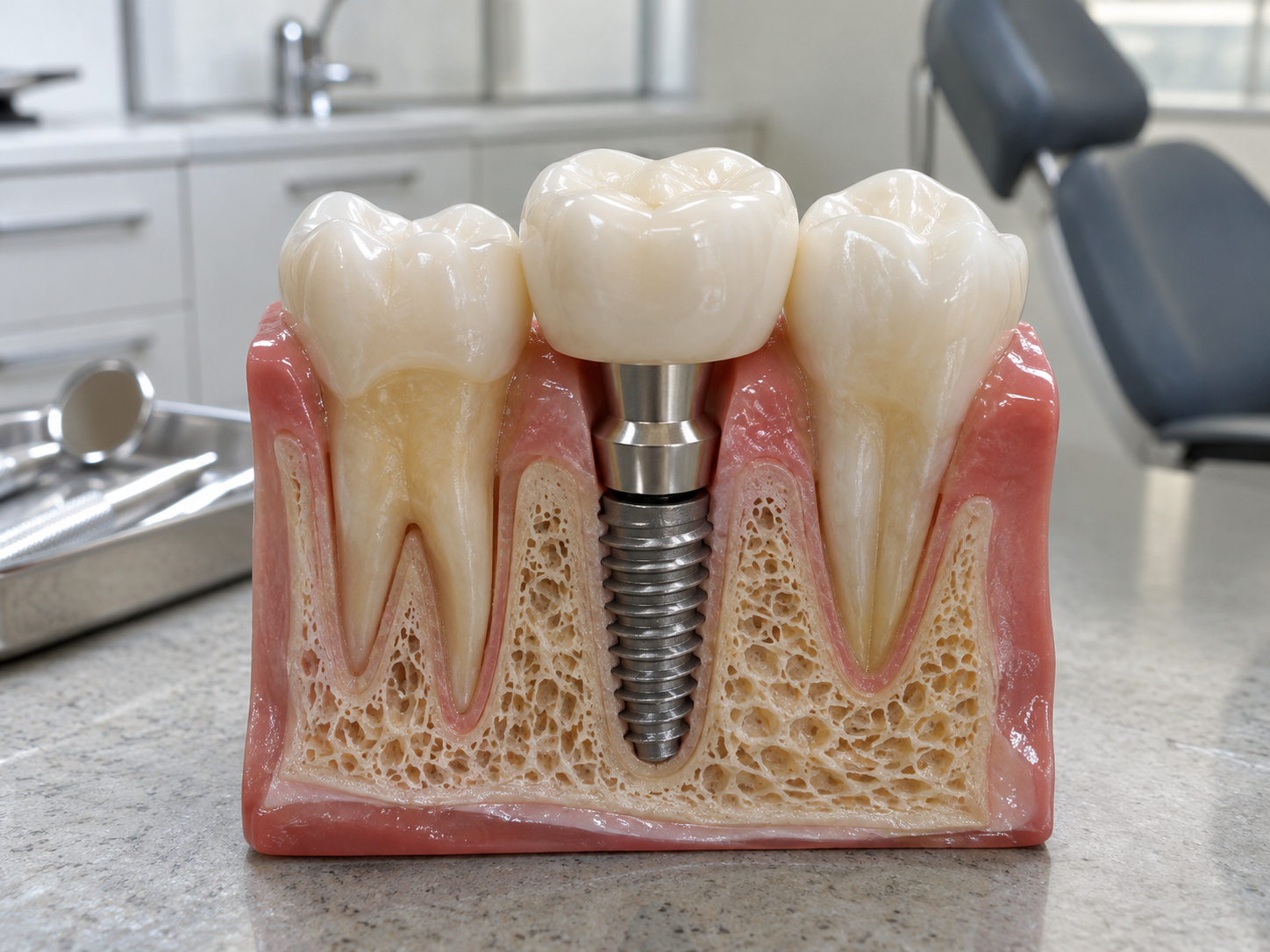
Think of a dental implant as a connected system. The crown receives the biting forces when you chew, the abutment transfers those forces to the implant, and the implant distributes them to the surrounding jawbone. Each component has an important role in maintaining the stability and function of the replacement tooth.
If one component is poorly designed or positioned, it can affect the performance of the overall restoration. That’s why dentists carefully plan the crown’s shape, implant position, and bite before beginning treatment.
These components aren’t limited to replacing a single tooth. A dental bridge can be supported by two or more implants, while several strategically placed implants can help stabilise a full denture and reduce unwanted movement.
Daily cleaning is equally important. The Scottish Dental Clinical Effectiveness Programme recommends maintaining good oral hygiene around implant-supported restorations. A single implant crown should generally be cleaned with the same attention you give your natural teeth. Our guide on cleaning around a dental implant explains the daily care routine in more detail.
Questions to Ask About the Parts
Before beginning treatment, it’s reasonable to ask your dentist a few questions about the components being used. Understanding these details can help you feel more confident about your treatment plan.
- Which dental implant system and brand will be used?
- What material will the implant and abutment be made of?
- Will my final crown be screw-retained or cement-retained?
- What material will be used to make my crown?
- What maintenance and aftercare will be required?
Write down the answers and keep your treatment records. These details can be useful if you need repairs in the future or visit a different dentist.
At Executive Implant Dental Clinic, implant treatment is led by Dr. K.D. Chaudhary, a prosthodontist with more than 21 years of experience in restorative and implant dentistry.
If you’re still getting to grips with the basics, start with our guide explaining what a dental implant is, or ask us your questions during a consultation at a time that suits your schedule.
Frequently Asked Questions
Is the Implant Itself Visible?
No. The implant post is hidden inside the jawbone. The abutment connects it to the crown and may extend through the gum tissue. When you smile, people generally see only the replacement crown. For front teeth, dentists take additional care when planning the gum contour and final appearance.
Can the Crown Be Replaced Without Removing the Implant?
Often, yes. The crown experiences regular wear during chewing, so if it becomes chipped, damaged, or worn, it may be possible to replace it while leaving the implant securely in the jawbone. Screw-retained crowns are generally easier for dentists to remove and refit, which is one reason they may be preferred in certain situations, particularly for molars.
Does One Implant Always Carry One Crown?
Not always. For a single missing tooth, one implant typically supports one crown. However, if three consecutive teeth are missing, two strategically positioned implants may sometimes support a three-unit bridge instead of requiring three separate implants.
The number of implants needed depends on the size of the gap, available bone support, bite forces, and the overall treatment plan recommended by your dentist.