
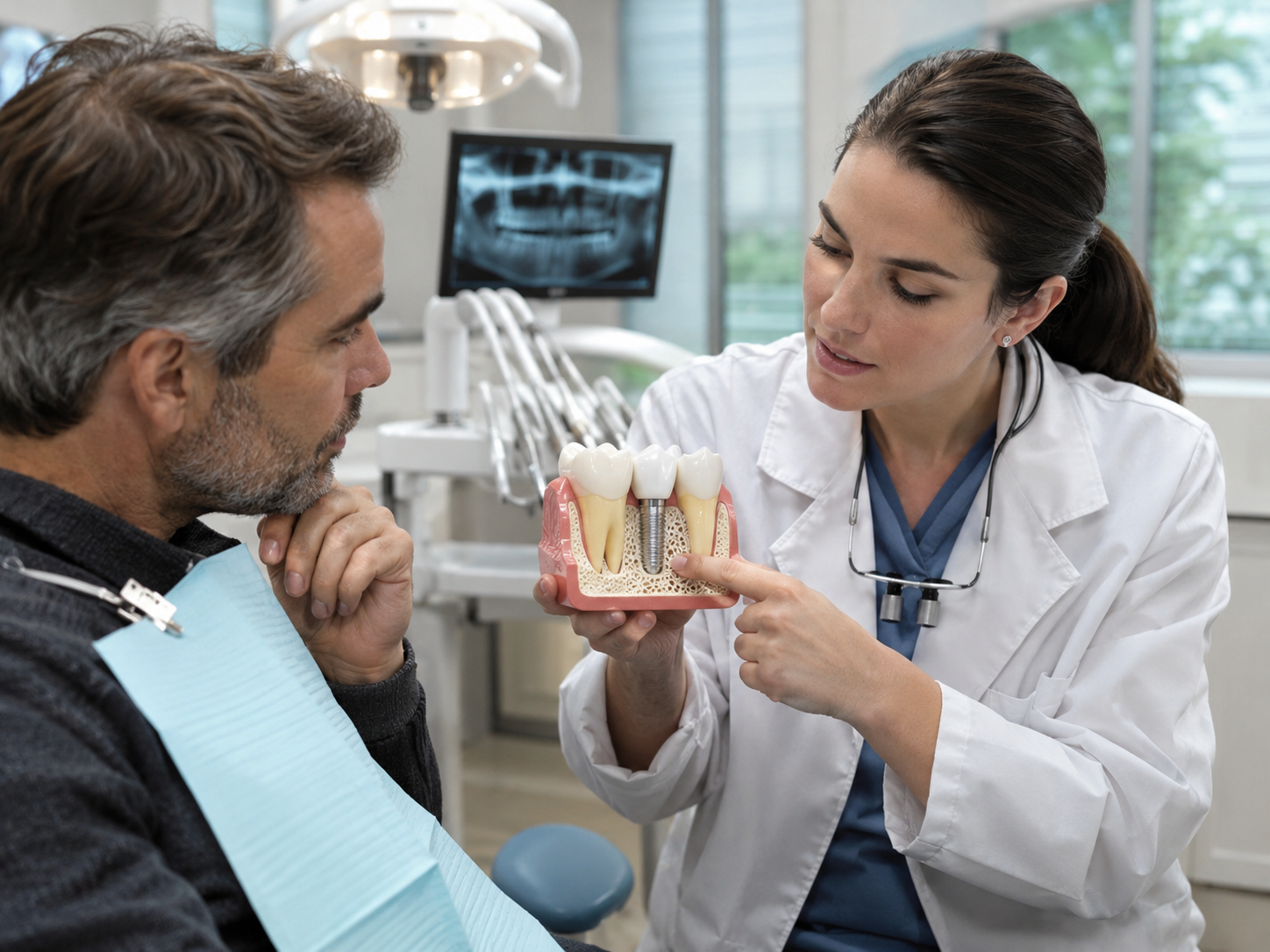
An implant needs enough healthy jawbone around it to hold firm. The bone has to be tall enough, wide enough and healthy enough to grip the implant as it heals, and to carry the force of chewing for years afterwards. If one of those is short, the plan usually changes rather than stops.
That’s why bone is one of the first things checked when someone is assessed for dental implants in Greater Noida, often well before anyone talks about crowns or costs. This guide explains what the dentist is looking for, why bone shrinks after a tooth is lost, and what can be done when there isn’t quite enough.
Why does an implant need bone at all?
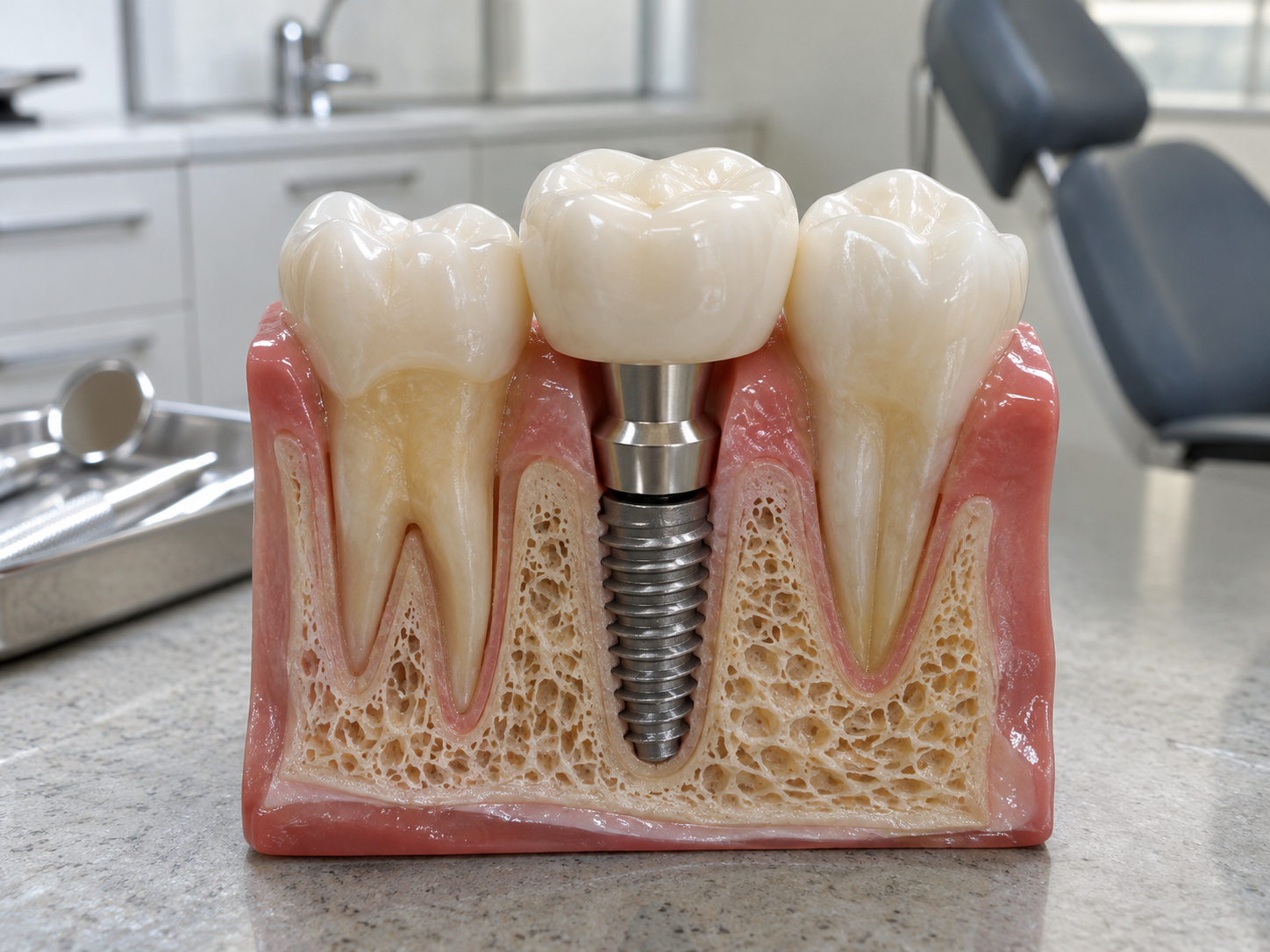
Because the bone does the holding. After placement, the jawbone gradually grows around the implant and locks it in place, and the American Dental Association notes that this can take up to several months.
It affects looks as well. Where the ridge has dropped, a crown might need to be made longer to reach your bite, and the gum above it may end up higher than next door. You’d notice that on a front tooth.
Why is there sometimes not enough bone?
Usually it’s because the tooth has been gone a while. After an extraction the bony ridge starts to shrink. A 2012 systematic review found losses of roughly 29–63% in width and 11–22% in height within six months of an extraction. Some people lose far less. Even so, a gap that’s been there for years will usually have a slimmer ridge than when the tooth first came out.
Other things can thin the bone too. Long-standing gum disease can affect the bone around teeth before they’re ever lost, and an infection can damage the area. In the upper back jaw, the sinus sits just above the roots. That can leave only limited height to work with, even in someone whose gums are otherwise perfectly healthy. A scan shows how much room there is.

How is the bone checked?
Your dentist looks at the gap, feels the ridge with a gloved finger and then takes images. A standard X-ray shows height reasonably well, but width is harder to judge on a flat picture, so a 3D scan is often used for implant planning. That scan shows the ridge from several angles, including how wide it is. If you have older X-rays, bring them along. At our clinic, digital scans and imaging are used to plan treatment.
What they’re measuring, in plain terms:
| What the scan shows | What it may mean for planning |
|---|---|
| Good height and width | The implant can usually be placed in the standard way |
| Enough height, narrow width | A narrower implant, or a small graft placed at the same visit, may be discussed |
| Limited height in the upper back jaw | The sinus may need to be considered; extra procedures may be suggested |
| Significant loss after many years | A separate grafting stage may come first, with healing time before the implant |
Treat these as rough patterns. Your own plan depends on the exact measurements, where the implant needs to go and your general health, so two people with similar scans can still end up with different plans. Ask to see the images yourself; most patients find it much easier to understand the options once they’ve seen where the bone is thick and where it’s thin.
What if there isn’t enough bone?
Thin bone doesn’t automatically rule you out, and it’s one of the most common situations implant dentists plan around. Where bone is short, it may be possible to build it up with a grafting procedure, according to Leeds Teaching Hospitals NHS Trust. Sometimes a small graft goes in alongside the implant. Larger defects may need a graft first and then a wait while it heals before the implant is placed, and how long that takes differs from person to person.
Grafting adds time and an extra procedure, and it isn’t the right choice for everyone. A bridge or denture may suit some people better, especially if surgery is a concern or the extra months of healing don’t fit around work and family. Ask for the pros and cons of each route before you book anything.
Does general health affect the bone?
Yes. Age matters less than overall health, according to the ADA. Diabetes can get in the way of healing, and tobacco can slow it. Smoking stands out here: a 2021 review found implant failure was more than twice as likely in smokers as in non-smokers.
If either applies to you, mention it early, along with any medicines you take. It doesn’t necessarily change whether an implant is possible, but it changes how the treatment is planned and how closely the healing is checked. Well-controlled diabetes, for example, is a different picture from diabetes that isn’t yet under control.
Where should you start?
If you’re thinking about an implant, start by finding out what your bone looks like, since most of the plan depends on it. At Executive Implant Dental Clinic, Dr. K.D. Chaudhary, a prosthodontist with more than 21 years in restorative and implant dentistry, plans implants from the scan up. If you’re still deciding, our guide on what happens if a missing tooth is not replaced explains how a gap changes over time. Once an implant is in, you can read how the bone bonds with an implant during healing. Or simply book an assessment and have your own scan explained in plain language.
Frequently asked questions
How much bone is needed for an implant?
There’s no single number that fits everyone. It depends on where the implant goes, the implant’s size and how close nearby structures such as the sinus or nerve are. Your dentist will measure your bone on a scan and explain what it means for your options, including whether any grafting is likely.
Does a bone graft hurt?
Implant placement is usually done under local anaesthetic, an injection that numbs the area, as Guy’s and St Thomas’ describes, and smaller grafts are often done the same way. Ask your dentist what yours will involve and how to manage any soreness in the days afterwards.
Can bone loss be prevented after an extraction?
Sometimes the socket can be filled at the time of extraction to help it keep its shape. A Cochrane review found limited evidence that these techniques may reduce how much the ridge shrinks, so whether it’s worthwhile depends on the tooth, the site and your plans.