
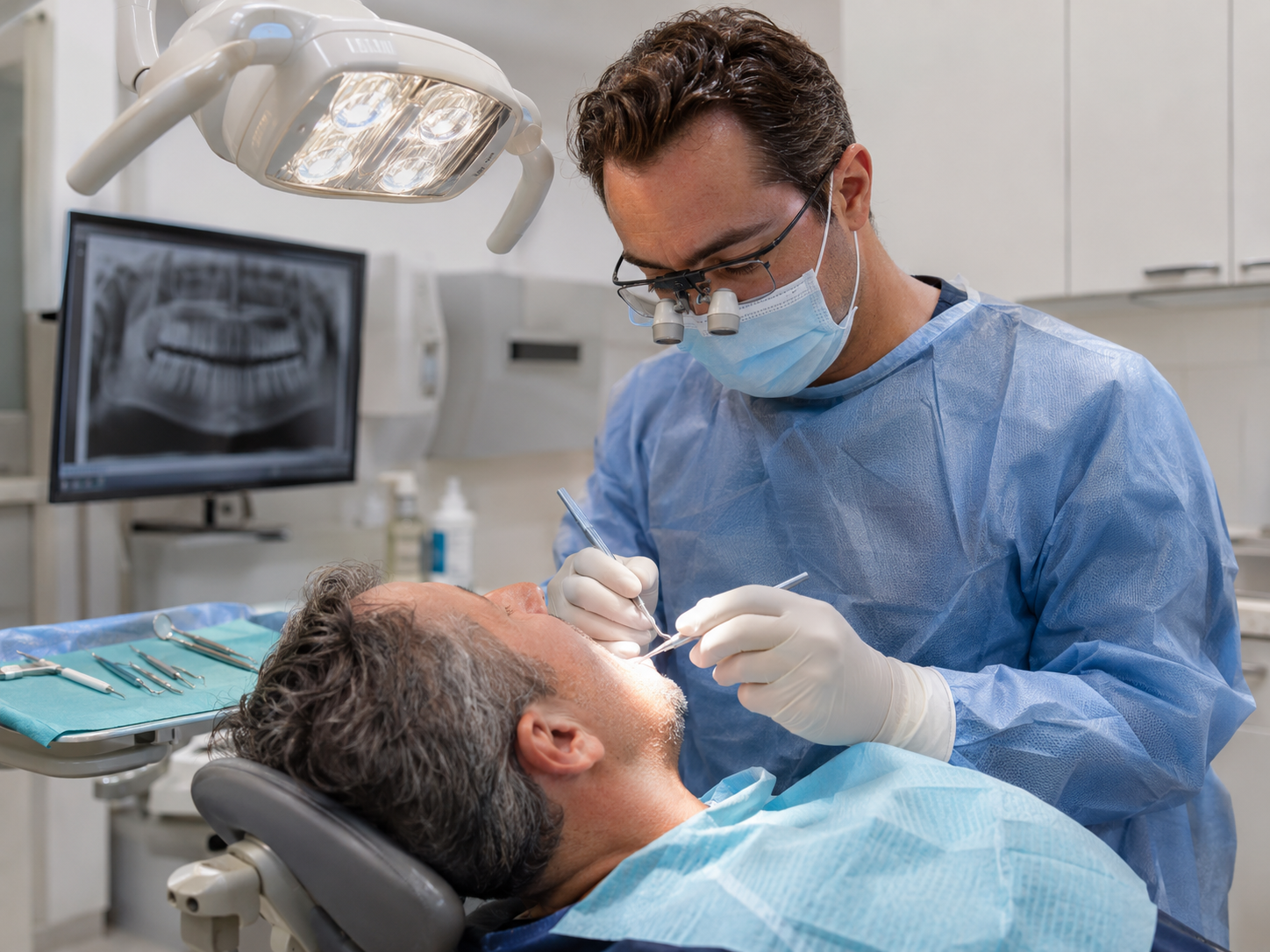
A straightforward single implant often involves around four to six visits spread over a few months, though the exact number depends on your bone, your health and whether anything needs doing first. The visits themselves are fairly short, and most of the time in between is simply healing.
If you’re planning dental implants in Greater Noida around work, travel or family, it helps to see the whole sequence before you start. This page walks through what each visit is for, where the waiting happens, and what can add or remove appointments.
Why can’t it all be done in one go?
Mostly because bone can’t be hurried. After the implant is placed, the jawbone grows around it and holds it in place, which the American Dental Association notes can take up to several months. Leeds Teaching Hospitals NHS Trust says implants are usually left for 2 to 6 months to bond before they’re used.
The replacement tooth also has to be made to fit your mouth and bite, which takes its own time at the dental lab. Cutting either step short can mean redoing it later. It’s easier to accept the gaps between visits when you know about them from day one.
A typical sequence, visit by visit
Here’s roughly how one tooth tends to go. Yours may merge a couple of these or add one.
- Consultation. Your dentist looks at the gap and your gums, asks about your health and takes X-rays or a 3D scan to see how much bone there is. A bridge or denture gets discussed too.
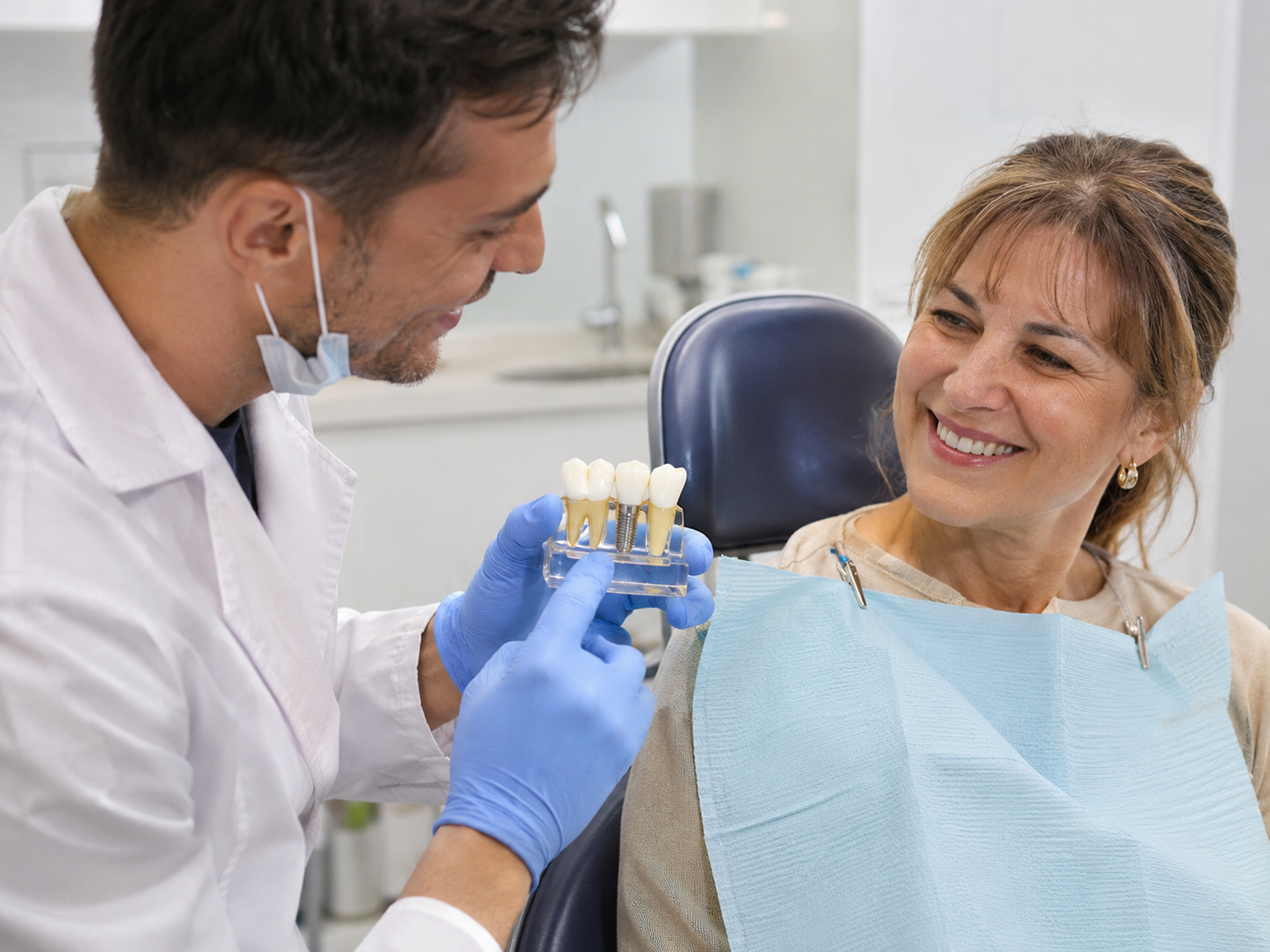
- Planning, often on the same day. The implant is planned backwards from where the crown has to sit. Ask for the plan in writing, with timings and costs.
- Placement. This is the surgical visit. Most people have it under local anaesthetic, which Guy’s and St Thomas’ describes as an injection that numbs the area.
- A quick review a week or two on. By then the gum has usually settled, as Leeds Teaching Hospitals NHS Trust says it tends to heal within 1 to 2 weeks, and stitches can come out.
- Then a longer wait while the bone bonds, followed by a check. A healing cap is sometimes fitted at this point to shape the gum.
- A scan or impression of the implant, so the lab can make a crown that lines up with your bite and the teeth either side.
- Fitting day. On go the abutment and crown, the bite gets adjusted, and you get shown how to clean around it.
Some of these can be combined, so many people end up with four to six visits rather than seven. After that come routine check-ups. You’ll keep having those for as long as the implant’s in, same as with natural teeth, so leave room for them in your year.
What happens between visits?
Most of the treatment time is spent waiting at home rather than sitting in the chair. You carry on with normal life in those weeks. Keep the area clean the way you were shown, and avoid biting hard food right on the implant site until your dentist says it’s ready. If something feels loose, swells up again after it had settled, or keeps aching, ring the clinic rather than waiting for your next booked visit.
What can add visits?
If the old tooth is still in, it has to come out first, and the socket may need to heal before anything else happens. Thin bone is another common reason. Leeds Teaching Hospitals NHS Trust notes that bone can sometimes be built up with a graft, but that’s an extra procedure with its own healing time.
Active gum disease usually gets treated before surgery. Smoking or diabetes that isn’t well controlled can slow healing, so you might be seen more often. You’d want to hear about any of this at your first visit rather than halfway through.
Can anything reduce the number of visits?
Sometimes, though not always. In suitable cases, an implant can be placed at the same visit as an extraction, or a temporary tooth can be fitted soon after placement so you’re not without one during healing. Whether that’s sensible depends on the bone, the position of the tooth and how firmly the implant sits on the day. Plenty of people aren’t suited to it, so ask whether you are.
Digital scanning can also save a visit by replacing traditional impressions, and some planning steps can be done on the same day as the consultation. Ask which steps can be combined in your case.
How should you plan around the visits?
Once you have the plan, pencil in rough dates and ask which visits are hard to reschedule. Build your week around the surgical one. Go easy that day and the next, and stick to softer food for a little while. The rest are mostly brief.
If you travel for work, try not to book long trips in the two weeks after placement, so the early review can happen on time. Mention any exams, weddings or trips when the dates are being set. Shorter appointments are often easier to move around than the surgical one.
At Executive Implant Dental Clinic, implant treatment is led by Dr. K.D. Chaudhary, a prosthodontist with more than 21 years in restorative and implant dentistry. If you want to understand the healing stage in more depth, read how an implant bonds with bone. To see whether bone might add a step in your case, our guide on why bone support matters explains what’s checked. Or simply arrange a consultation and get a timeline for your own mouth.

Frequently asked questions
Will I be without a tooth during healing?
Usually not, if the gap shows. A small removable denture or a temporary bridge can fill in while the implant heals, so mention it early.
How long is each appointment?
Reviews and checks tend to be quick. Placement is the long one, and it depends on how many implants are placed and whether grafting is done at the same time. Your dentist can give you a realistic time for each visit when the plan is made.
Do I need check-ups after the crown is fitted?
Yes. Guy’s and St Thomas’ NHS Foundation Trust is clear that implants need looking after with your dentist’s help. At each review the gum and bone around it get checked. Some people come back every 3 months and others every 2 years; the NHS gives that as the usual range.