
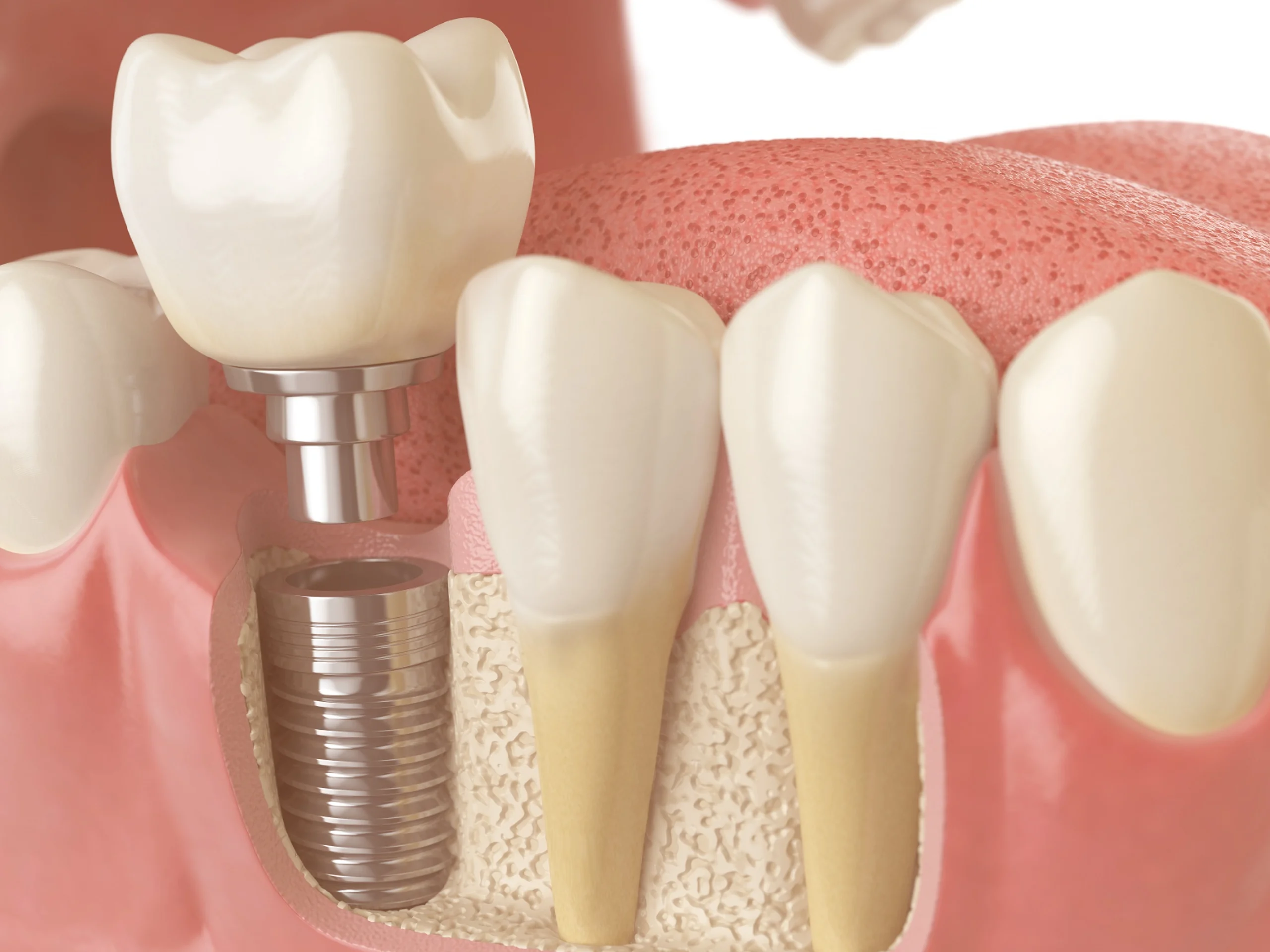
After an implant is placed, the jawbone slowly grows right up against its surface and locks it in place. Dentists call this osseointegration. It happens quietly over a few months, and it’s the reason an implant can eventually take the force of chewing much like a natural root.
Most people having dental implants in Greater Noida notice this stage least, even though it’s usually the longest part of treatment. Here’s what’s going on under the gum, how long it tends to take, and what helps or slows it down.
What is osseointegration, in plain terms?
Put simply, the bone accepts the implant and grows onto it. The implant is usually titanium, a material the body tolerates well, and its surface is designed to let bone cells settle on it. Over the following weeks and months, new bone forms around the threads until the implant is held by the bone itself rather than just by how tightly it was screwed in.
The American Dental Association describes it simply: the bone grows around the implant and holds it in place, and that can take up to several months.
What happens in the first few weeks?
The first days are about the gum. There may be some swelling and tenderness, which your dentist will explain how to manage, and you’ll usually be asked to stick to softer food and keep the area clean. The gum in the area usually heals within 1 to 2 weeks, according to Leeds Teaching Hospitals NHS Trust.
Underneath, things are slower. On day one the implant stays put because it’s wedged tightly into the bone, a bit like a screw in wood. Over the next weeks the bone reshapes itself and starts to hold on in its own right. While that switch is happening, the implant shouldn’t take hard biting.
How long does the bond take?
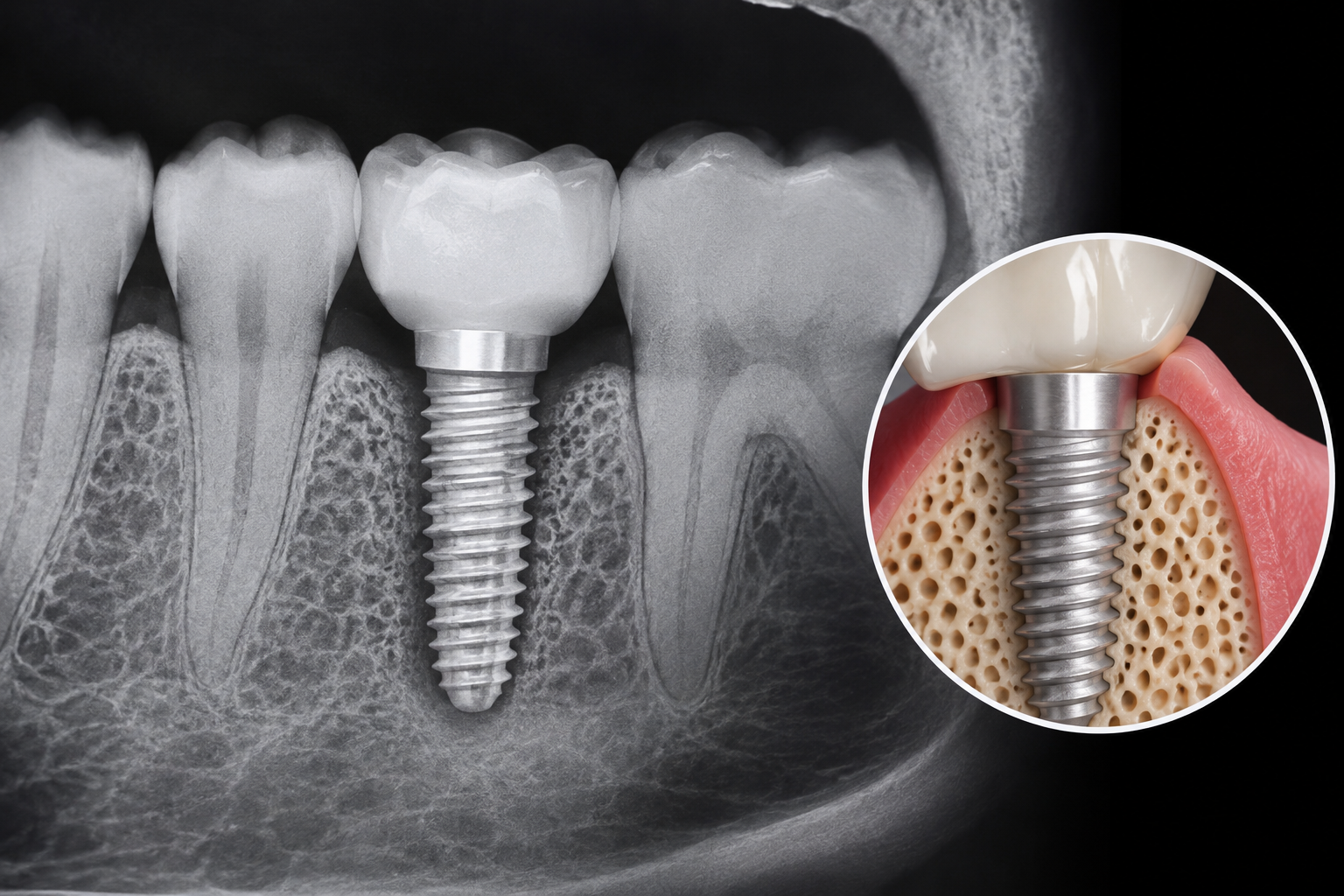
Usually somewhere between 2 and 6 months, going by Leeds Teaching Hospitals NHS Trust. That’s a big window, and patients often ask why. Part of it is the jaw itself: bone in the lower jaw tends to be denser than in the upper, and dense bone may bond sooner. A grafted site needs extra months. Then there’s your general health, and how firm the implant felt on the day it went in. Your dentist should give you a rough figure for your own mouth when the plan is drawn up.
Your dentist will check the implant before moving on to the crown. That check may include an X-ray and a simple test of how firmly the implant sits, and if it needs a little longer, the crown simply waits until the bone is ready. A few extra weeks at this point is nothing to worry about.
What helps healing, and what slows it?
Some things are in your hands. Keep the area clean as advised, avoid chewing hard food on that side until you’re told it’s fine, and go to the review appointments even if everything feels normal. Take any medicine you’ve been prescribed as directed, and check with your dentist before starting something new.
If you smoke, this bit’s for you. The ADA lists tobacco among the things that slow healing, along with diabetes. In a 2021 review of 292 studies, smokers’ implants failed more than twice as often as non-smokers’. Expect a frank chat about it before your surgery date is fixed.
When should you call the clinic during healing?
Some tenderness in the first few days is expected. What isn’t expected is pain that gets worse after the first few days instead of better, or swelling that keeps growing. A bad taste that won’t shift, a fever, or an implant that feels as though it moves also need a call. Any of those is a reason to call the clinic rather than wait for your next review.
Very occasionally, swelling spreads. The NHS advises going to A&E if swelling around the eye or neck appears, or if swelling in the mouth or neck makes it hard to breathe, swallow or speak. That’s rare after routine implant placement, but it’s worth knowing. Usually a quick look is enough to put your mind at rest, so don’t hold back from calling.
What if it doesn’t bond?
It’s uncommon, but it does happen. An implant that hasn’t integrated may feel loose or uncomfortable, and the dentist will usually remove it, let the site heal and discuss whether to try again. Some people do go on to have a second implant placed once the area has settled and the likely cause has been looked into.
That said, failure is the exception. A 2019 review in the Journal of Dentistry worked out that roughly 96 in every 100 implants were still there ten years on. Yours will depend a fair bit on your health and on the cleaning you do at home.
What does this mean for your treatment plan?
Mainly that the wait is planned in from day one. At Executive Implant Dental Clinic, implant treatment is led by Dr. K.D. Chaudhary, a prosthodontist with more than 21 years in restorative and implant dentistry. Ask how long each stage should take before you begin. To see where this healing stage fits among the other appointments, from the first scan to the final crown, read how many visits an implant takes. Once the crown is on, cleaning around a dental implant is what keeps that bond healthy. If you’d like your own timeline, you can ask for an appointment whenever it suits you.

Frequently asked questions
Will I feel the implant bonding?
No. Osseointegration happens without any sensation at all, which is why some people worry nothing is happening. Once the first few days of gum healing are over, most people forget the implant is there until the next review.
Can I eat normally while it heals?
You’ll usually be advised to avoid chewing hard or sticky food on the implant side during healing, and to keep up gentle cleaning around the area. Your dentist will tell you when you can return to your normal diet, which is usually once the crown is fitted. If you’re unsure what counts as soft, dishes like dal, khichdi, idli or curd rice are easy on the area.
Does age affect how well an implant bonds?
Not by itself. What the American Dental Association points to is general health. One 2019 review noticed implants lasting slightly less well in people over 65, so if you’re older your dentist will look closely at your health and bone first.