
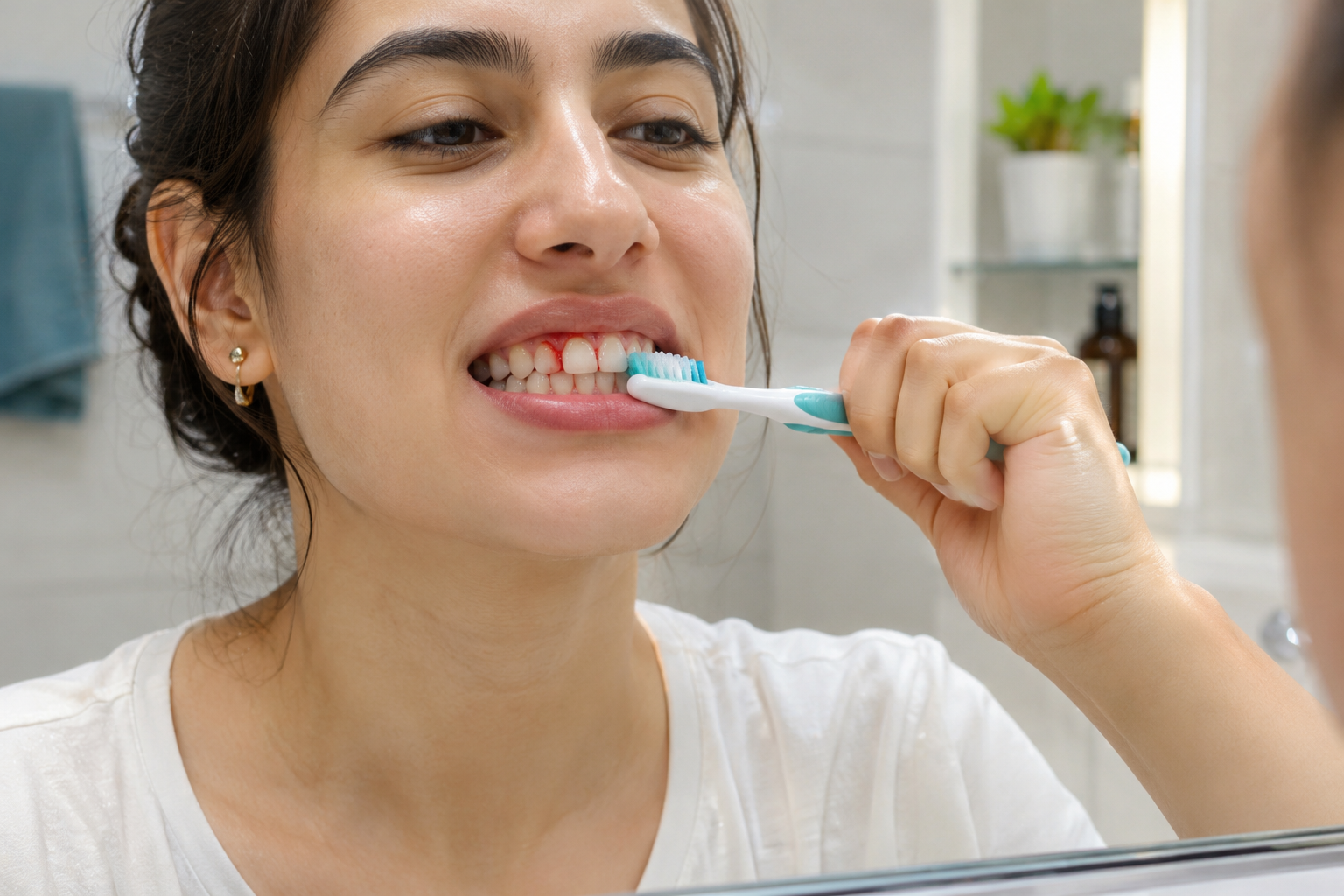
Noticing a little pink in the sink when you brush your teeth is common, but it isn’t something you should ignore. In many cases, bleeding gums indicate inflammation along the gum line, usually caused by plaque build-up. The NHS identifies bleeding when brushing, flossing or eating hard foods as one of the signs of gum disease.
Early gum inflammation can often improve with better oral hygiene and regular cleaning. However, many people only visit a dentist in Greater Noida after bleeding has been happening for months. You don’t need to wait that long. Here’s why your gums may bleed, what you can do at home, and when it’s time to see a dentist.
Why Do Gums Bleed When You Brush?
Plaque is a soft, sticky film of bacteria that builds up on your teeth throughout the day. When it collects along the gum line and isn’t removed properly, it can irritate the gums. They may become swollen, look redder than usual and bleed more easily.
This early stage of gum disease is called gingivitis. It often develops without causing pain, which is why many people don’t realise there’s a problem until they notice bleeding while brushing or changes in their breath.
If plaque isn’t removed, it can harden into tartar, also known as calculus. Unlike soft plaque, tartar cannot be removed with a regular toothbrush. It needs professional cleaning. Continued inflammation can eventually affect the tissues and bone supporting your teeth, leading to a more advanced condition called periodontitis.
However, plaque isn’t the only possible cause of bleeding gums. Other factors include:
- Brushing too hard: Using excessive pressure or a hard-bristled toothbrush can irritate your gums and cause bleeding.
- Starting to floss: If you haven’t cleaned between your teeth regularly, your gums may bleed when you begin flossing again. Persistent bleeding should still be checked.
- Hormonal changes: Pregnancy can make your gums more sensitive and prone to inflammation.
- Certain medications: Blood-thinning medicines can make bleeding more noticeable. Some other medications can also affect oral health.
- Smoking: Smoking increases the risk of gum disease and can mask some signs of inflammation, including bleeding.
Should You Stop Brushing If Your Gums Bleed?
No. Avoiding the areas that bleed may allow more plaque to accumulate, making the inflammation worse. Instead, continue brushing gently with a soft-bristled toothbrush, paying attention to the areas where your teeth meet your gums.
The NHS recommends brushing twice a day with fluoride toothpaste and cleaning between your teeth daily using dental floss or interdental brushes.
After brushing, spit out the excess toothpaste rather than rinsing your mouth with water. This helps fluoride remain on your teeth for longer.
A Two-Week Oral Hygiene Routine for Bleeding Gums
If your gums have mild bleeding and you don’t have other concerning symptoms, improving your daily cleaning routine may help reduce inflammation. Try following these steps consistently:
- Morning and evening: Brush for two minutes using a soft-bristled toothbrush. Use gentle, small circular movements, paying attention to the gum line.
- Once a day: Clean between all your teeth using interdental brushes or dental floss. Choose the tool that fits your tooth spacing.
- During the first few days: You may still notice some bleeding as you establish a consistent cleaning routine. Continue cleaning gently rather than avoiding the affected areas.
- After two weeks: Check whether the bleeding has reduced and whether your gums look less swollen or irritated.
If your gums continue to bleed, or the bleeding gets worse, arrange a dental appointment rather than relying on home care alone. You should also seek an examination sooner if you notice pain, swelling, loose teeth or other unusual symptoms.
Which Toothbrush and Cleaning Tools Help Most?
Both manual and electric toothbrushes can clean your teeth effectively when used correctly. Choose a toothbrush with soft or medium bristles and make sure you clean along the gum line, including the inner and outer surfaces of your teeth.
If you find it difficult to brush thoroughly by hand, a rechargeable electric toothbrush with a small round head may make cleaning easier. Some models also include pressure sensors to help prevent brushing too hard.
Replace your toothbrush or electric toothbrush head when the bristles become frayed or start to spread out.
For cleaning between your teeth, interdental brushes are available in different sizes. Your dentist or hygienist can recommend the right sizes for your teeth. Some people need more than one size to clean different spaces effectively. Dental floss or floss picks may be more suitable for tighter gaps.
What Does a Gum Disease Assessment Involve?
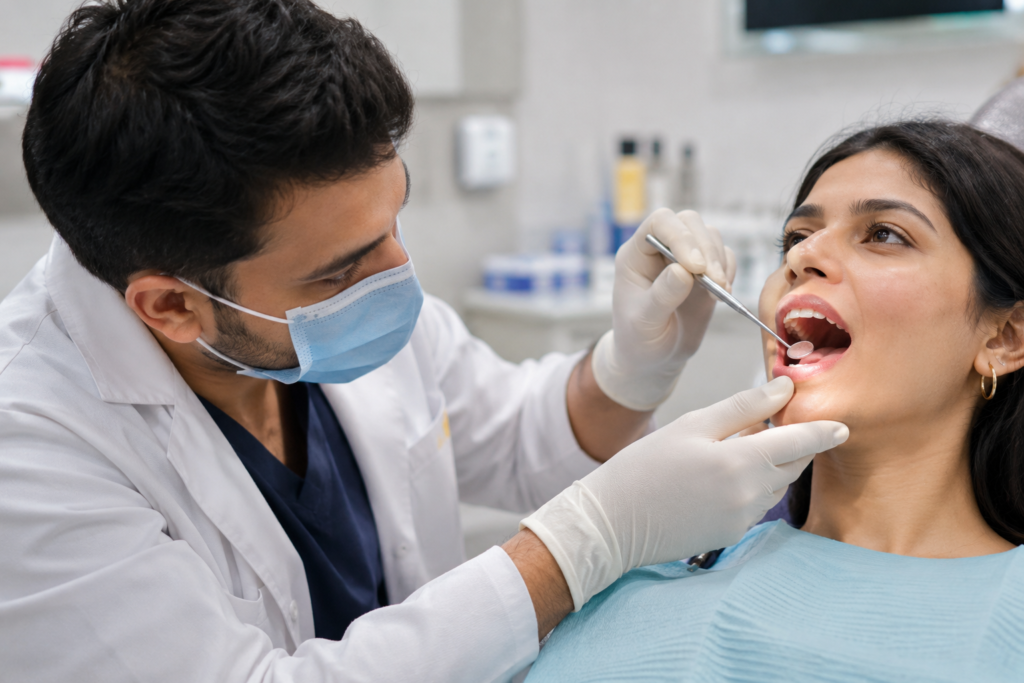
If you visit your dentist because of bleeding gums, the examination usually begins with a visual assessment. Your dentist checks the colour, shape and condition of your gums and looks for plaque and tartar around the teeth and gum line.
A thin, blunt instrument called a periodontal probe may then be used to measure the spaces between your teeth and gums. These spaces are known as periodontal pockets. Deeper pockets can indicate that gum disease has progressed beneath the gum line, where regular brushing cannot reach effectively.
Your dentist may also recommend dental X-rays to assess the bone supporting your teeth. They may ask about your general health, medications and smoking habits to identify factors that could be contributing to the problem.
Based on the findings, your dentist can recommend an appropriate treatment plan.
- For early gum inflammation: Professional cleaning to remove plaque and tartar, along with guidance on improving your daily oral hygiene.
- For more advanced gum disease: Deeper cleaning beneath the gum line, sometimes called scaling and root planing, may be required over multiple appointments.
- For ongoing gum problems: Regular dental reviews and maintenance appointments help monitor gum health and reduce the risk of further damage.
When Should You Worry About Bleeding Gums?
Occasional bleeding may not indicate a serious problem, but regular bleeding deserves attention. Arrange a dental appointment if your gums bleed frequently, appear swollen or red, or you have persistent bad breath.
Seek an urgent dental assessment if your gums are very painful or swollen, your teeth feel loose, or you notice an unusual lump in your mouth. These are among the warning signs highlighted by the NHS.
Bleeding that happens without brushing or flossing, or that occurs alongside unusual bruising or bleeding elsewhere, should also be discussed with a medical professional. Mention any other symptoms, such as unusual tiredness or frequent bruising, so they can assess whether an underlying health issue needs investigation.
At Executive Implant Dental Clinic, care is led by Dr. K.D. Chaudhary, a prosthodontist with more than 21 years of experience in restorative and implant dentistry.
If your gums bleed in one particular area where food frequently gets trapped, our guide on why food gets stuck between the same teeth may help explain what is happening.
You can also read our article on what happens during a dental check-up to understand what to expect during a routine examination. If you’ve noticed persistent bleeding, book a gum health assessment at a convenient time.

Frequently Asked Questions About Bleeding Gums
Is It Normal for Gums to Bleed a Little When Brushing?
Bleeding gums are common, but they shouldn’t be considered normal. If your gums bleed regularly while brushing or flossing, it may indicate inflammation caused by plaque build-up or early gum disease. Improving your oral hygiene can help, but persistent bleeding should be assessed by a dentist.
Can Mouthwash Stop Gums from Bleeding?
Some mouthwashes can help reduce bacteria and plaque, but they shouldn’t replace brushing and cleaning between your teeth. Removing plaque consistently is essential for reducing gum inflammation. If you’re considering using a medicated mouthwash for an extended period, ask your dentist whether it’s suitable for you.
Can Bleeding Gums Affect Pregnancy?
Pregnancy-related hormonal changes can make gums more sensitive to plaque, increasing the likelihood of inflammation and bleeding. This is sometimes called pregnancy gingivitis. Continue brushing gently, clean between your teeth daily and attend regular dental appointments. Let your dentist know you’re pregnant so they can advise you on suitable examinations and any necessary treatment.