
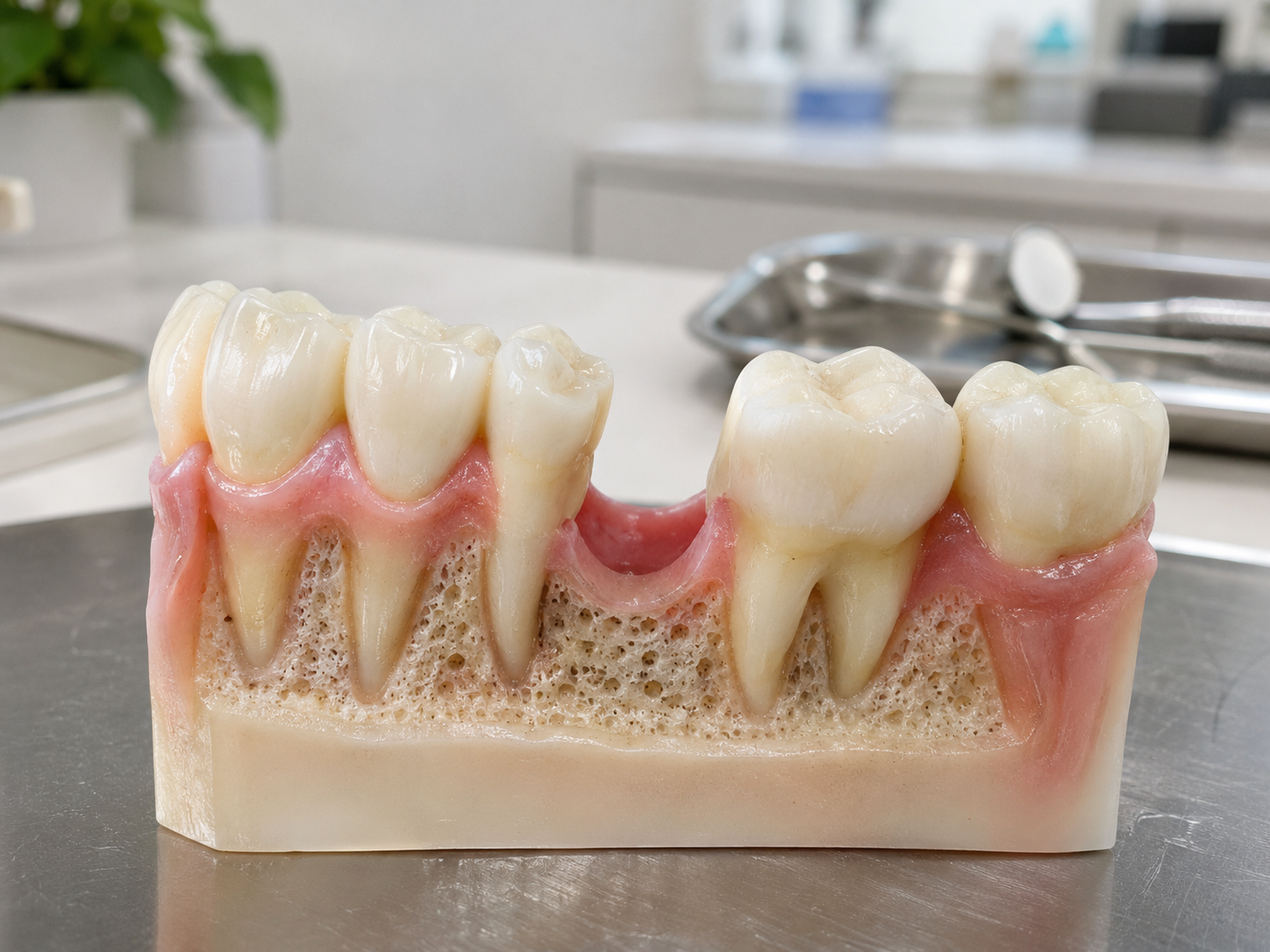
Often, not much happens at first. A gap at the back of your mouth can go unnoticed for months while you chew on the other side. Slowly, though, the bone underneath and the surrounding teeth can start to change. It’s easier to plan for these changes early than to address them later.
People usually start asking about this after a tooth extraction. Others are weighing up dental implants in Greater Noida against a bridge or denture and want to know whether they can simply leave the gap as it is. You can, and many people do for years. Below, we explain what usually changes, what often doesn’t, and how to make the decision at your own pace.
Does the Jawbone Change After a Tooth Is Lost?
Usually, yes. The bone that once supported the tooth’s root tends to shrink after the root is removed because it no longer receives the stimulation associated with a natural tooth. A 2012 systematic review found that within six months of a tooth extraction, the ridge of bone lost approximately 29–63% of its width and 11–22% of its height.
These figures come from studies involving multiple patients, so the amount of bone loss can vary from person to person. Front teeth and molars may also behave differently. Still, the bone available next year may be thinner than it is today. This matters if you eventually consider a dental implant, as the implant needs sufficient bone for stable support.
That’s why your dentist may discuss bone health even if you’re nowhere near deciding on treatment. It’s useful for future planning, and you can ask your dentist to explain how your own bone looks on an X-ray or dental scan.
Can the Neighbouring Teeth Move?
They can. Teeth naturally sit in balance with the teeth beside them and the ones they bite against. When a tooth is removed, that balance can gradually change.
Dentists generally keep an eye on two things. First, the teeth beside the gap may begin to tilt into the empty space, with the back tooth often being more affected. Second, the tooth that previously bit against the missing tooth may slowly move out of its socket because it no longer has an opposing tooth to meet. This movement is called over-eruption.
Over-eruption is relatively common in back teeth that have lost their opposing partners. In a British Dental Journal study involving adults with unopposed back teeth, researchers concluded that many such teeth are likely to over-erupt, sometimes significantly. However, this movement generally develops over time, and some teeth never move noticeably. Comparing older and newer X-rays helps your dentist identify whether any changes have occurred.
What About Chewing, Cleaning, and Food Traps?
A missing tooth can change the way you chew. Many people gradually start favouring the opposite side without even noticing. This can put additional pressure on the remaining teeth, particularly if they already have large fillings or crowns.
If a neighbouring tooth tilts into the empty space, the contact between the teeth can open up. Food may then become trapped in the same spot after meals, making cleaning more difficult.
Trapped food can also irritate the surrounding gums. A 2025 review in Frontiers in Dental Medicine discusses the relationship between repeated food packing and local gum problems. You can remove trapped food with floss or interdental brushes, but an opened contact between teeth will not necessarily close on its own.
Sometimes, a dentist may simply need to reshape an existing filling. In other cases, the missing tooth and resulting changes may be contributing to the problem. If you notice bleeding from the gum around that area while brushing, mention it during your next dental appointment.

Is It Always a Problem?
No. Some gaps remain stable for a long time, and plenty of people live comfortably with a missing tooth for years without experiencing any of the changes described above. Many people, for instance, never replace a missing wisdom tooth.
A gap where the neighbouring teeth are healthy and the bite is relatively light may change very little. If you’ve lived with a gap for ten years and your bite still feels comfortable, that history is useful information for your dentist when considering whether treatment is necessary.
What matters most is which tooth is missing, how your bite functions, and how healthy your gums are. This is something your dentist needs to assess during an examination, usually by checking how your teeth meet and reviewing an X-ray where appropriate. A general rule cannot determine what’s best for every patient, so ask about the condition of your own teeth and the surrounding bone.
What Are the Options If You Do Want to Fill the Gap?
There are three main ways to replace a missing tooth, and each option comes with its own advantages and limitations.
- Dental implant: An implant replaces the missing tooth root and supports a replacement crown without requiring the neighbouring natural teeth to be altered. The NHS describes implants as a fixed alternative to removable dentures.
- Dental bridge: A bridge is a fixed replacement tooth supported by neighbouring natural teeth or, in some cases, implants.
- Removable denture: A denture can replace one or several missing teeth and is taken out for cleaning and at night, according to Leeds Teaching Hospitals NHS Trust.
None of these options is right for everyone. We’ve compared them side by side in our guide explaining what a dental implant is. If your main concern is bone loss, you can also read more about why adequate bone support matters for dental implants.
How Do You Decide Without Being Pushed?
Start by having the gap examined before worrying about treatment costs. Your dentist will want to know whether anything has changed since your last X-ray. If the surrounding teeth and bone remain stable, there may be no immediate need to replace the missing tooth. The decision can be discussed during your next regular check-up.
Bring your questions along. You might want to know whether the bone has become thinner or whether the opposing tooth has started to move. You can also ask whether waiting another year would affect your future treatment options. Make a note of what your dentist recommends so you can compare the findings at your next appointment.
At Executive Implant Dental Clinic, Dr. K.D. Chaudhary is a prosthodontist with more than 21 years of experience in restorative and implant dentistry. He can discuss all three treatment options with you, and leaving the gap alone may also be a reasonable choice depending on your dental condition.
You can read more about our dental implant treatment or request a call-back if you’d prefer to discuss your concerns before booking an appointment.

Frequently Asked Questions
How Long Can I Leave a Gap Before It Causes Problems?
It varies from person to person, so there isn’t a fixed timeline. Much of the initial bone remodelling happens during the first few months after tooth loss. Neighbouring teeth generally move more slowly, and some never move significantly. Regular dental check-ups and occasional X-rays, when clinically appropriate, help you and your dentist monitor any changes over time.
How Should I Clean Around the Gap?
Brush twice a day with fluoride toothpaste and clean between your teeth daily, as the NHS advises. Food can collect around the teeth next to the gap, so give these areas extra attention when cleaning.
Interdental brushes are available in different sizes, so ask your dentist which size is suitable for your teeth. Floss can also help remove food particles and plaque from areas that are difficult to reach with a regular toothbrush.
Can I Get an Implant Years After Losing the Tooth?
Often, yes. However, your dentist will need to assess the available jawbone before recommending treatment. A dental scan can help determine how much bone remains and whether it can support an implant.
If the bone has become too thin, a bone grafting procedure may sometimes help rebuild the area before implant placement, according to Leeds Teaching Hospitals NHS Trust.