Wisdom Tooth Removal In Greater Noida

A wisdom tooth can cause pain, swelling, or trouble when you chew, especially when there isn’t enough room for it to come through properly. Getting it checked early can help you understand what’s causing the problem and whether you need to remove the tooth.

CALL US ON

+91 99719 63789

What Is Wisdom Tooth Removal?

Wisdom teeth are the last teeth to come through at the back of your mouth. They may not have enough room to grow properly, which can leave them partly or fully stuck under the gum.
You may need to remove a wisdom tooth if it causes repeated pain, infection, decay, or problems for nearby teeth. If it is healthy and not causing trouble, your dentist may monitor it. An examination and X-ray can help decide what’s best for the tooth.

Signs Your Wisdom Tooth Needs Checking

These concerns are reasons for an assessment, not proof that the tooth must be removed.

Repeated soreness behind your last molar

Swollen gum around a partly erupted tooth

Food repeatedly gets trapped at the back.

A bad taste with pain or swelling

Difficulty opening your mouth comfortably

Options For A Problem Wisdom Tooth

Wisdom Tooth Removal, Step By Step

Check

We check the tooth and take an X-ray if needed.

Plan

We explain how we'll remove the tooth and what to expect.

Numb

We numb the area before starting the procedure.

Remove

We remove the tooth using the planned approach.

Aftercare

We explain how to care for the area after removal.
What To Expect After Treatment

Soreness, swelling, and some jaw stiffness are common afterward, particularly following surgery. Recovery varies with the tooth’s position and the treatment involved, so ask how long you should avoid your usual activities.

For the first 24 hours, avoid rinsing, spitting, or touching the area. Follow the cleaning instructions you’re given afterward. Contact a dentist if bleeding does not stop or pain and swelling become severe or worse. If you have trouble breathing or swallowing, seek emergency care.

When Wisdom Tooth Removal Can Help

Treats a wisdom tooth causing repeated infections

Removes a tooth that cannot be saved

Helps protect the tooth next to it

Removes an area where food keeps getting stuck
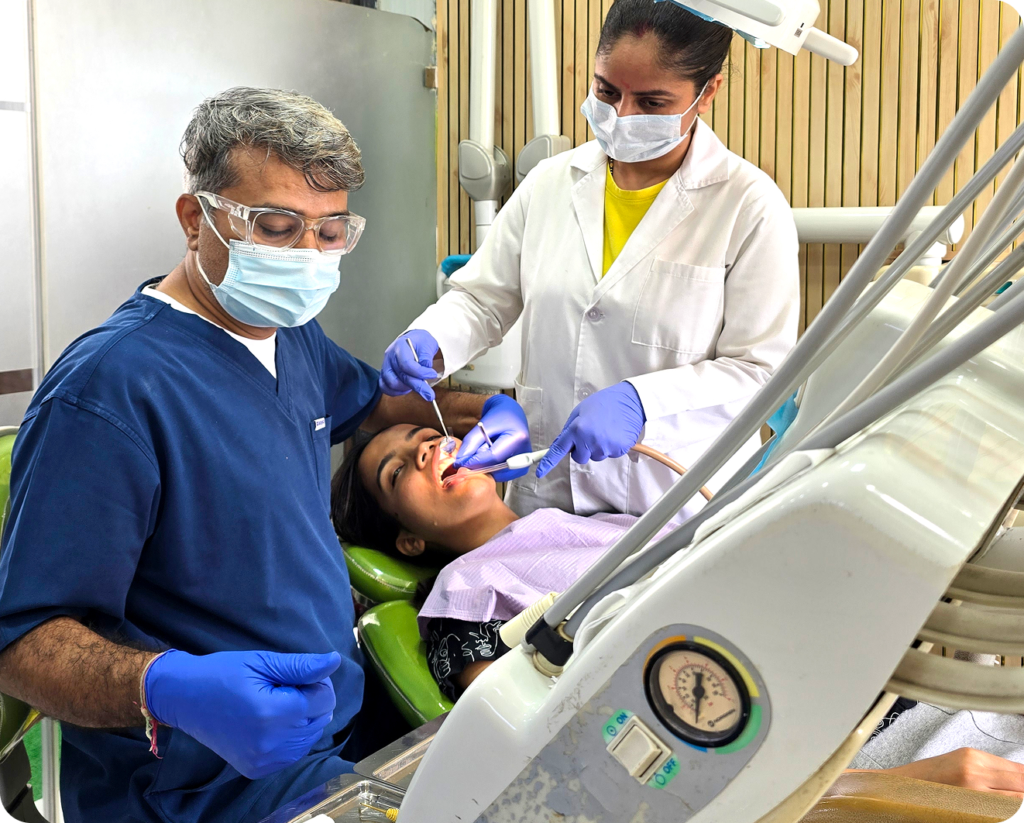
Removal is recommended when there is a clear reason. Your dentist can explain whether it suits you.

Risks And Alternatives

Wisdom tooth removal can cause bleeding, infection, dry socket, or soreness while the area heals. Lower wisdom teeth can also be close to nerves, which can sometimes cause changes in feeling in the lip, chin or tongue. Your dentist will explain the risks that apply to your tooth.
Removal is not always needed. A healthy wisdom tooth may be monitored. In some lower wisdom teeth, a coronectomy may be considered to lower the risk of nerve damage. The remaining roots are then monitored and may need treatment later.

Get Your Wisdom Tooth Checked

Before deciding on wisdom tooth removal in Greater Noida, have the tooth assessed so you understand what is causing the problem. We’ll explain your options, the proposed costs, and what recovery may involve.

Why Choose Executive Implant Dental Clinic

Executive Implant Dental Clinic brings dental specialists together under one roof. Its founder, Dr. K. D. Chaudhary, has over 21 years of clinical experience, including work at Fortis Hospital, Noida, and Safdarjung Hospital, New Delhi.
When you come to us for wisdom tooth removal in Greater Noida, we’ll explain why removal is being considered and what the alternatives involve. You can also discuss recovery, possible risks, and whether you need to see an oral surgeon before treatment.

faq

Common Questions About Wisdom Tooth Removal

The cost depends on the tooth, the type of removal, and any X-rays or specialist care needed. We’ll explain the treatment and charges after checking your tooth.
No. A healthy wisdom tooth that is not causing problems may not need to be removed. Your dentist will check the tooth before recommending removal.
The area is numbed with local anesthesia, so you shouldn’t feel pain during removal. You may feel some pressure. Tell us if you feel uncomfortable.
It depends on the tooth’s position and how it needs to be removed. We can estimate after checking your tooth.
Start with soft foods and slowly return to your usual diet as the area feels better. Avoid foods that can hurt the area or get stuck in it.
Contact a dentist if your pain becomes severe or worsens after a few days, especially if you have swelling, fever, or a bad taste. It could be a sign of dry socket or infection.